
Wrong Target?
A leader, by definition, is nothing without followers.
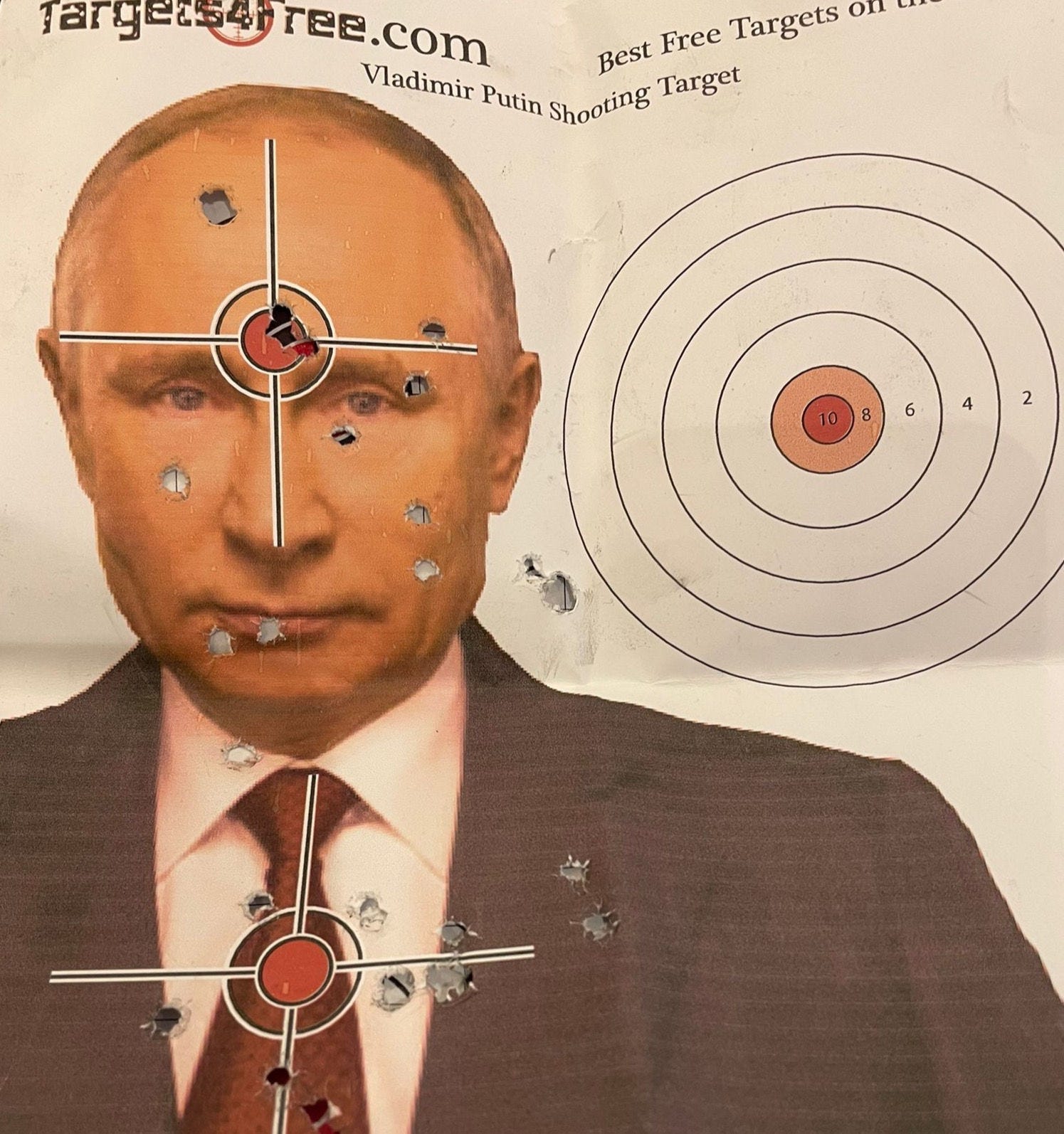
We spend a great deal of time analysing leaders. Their psychology, charisma, grievances, rhetoric… their next move. It’s comforting to imagine history turns on the decisions of one individual — that if only they changed, the problem would dissolve.
But that instinct can be misleading.
A leader, by definition, is nothing without followers.
Autocrats in particular cultivate the illusion of singular agency. The strongman narrative depends on it. Power appears concentrated; decisions seem personal. But that can only be true to an extent - even the most centralised regime relies on layers of consent, compliance, facilitation and collaboration.

Ministers implement. Business elites fund. Security services enforce. Technocrats rationalise. Platforms and propagandists amplify. Journalists write for clickbait. Ordinary citizens acquiesce. Remove that scaffolding and the leader stands alone - without a Pam Bondi or Greg Bovino you’re a blonde bouffant blowing in the wind.
The analytical mistake is to treat the leader as the primary pressure point. In reality, they’re likely to be the least responsive actor in the system. Leaders who stake their legitimacy on defiance often manoeuvre themselves into positions where backing down becomes existential.
In that position, flexibility disappears.
Followers, however, retain optionality.
Followers are exposed to externalities: sanctions (social and economic), economic contraction, reputational cost, diplomatic isolation, generational shifts in public opinion. They have assets to protect, futures to consider, relationships beyond the leader’s immediate circle. Their calculus is not identical to that of their leader. This does not mean they will defect quickly. Systems of power are sticky. Fear and loyalty are powerful adhesives. But structurally, followers have more room to move.
As Richard Rumelt argues, strategy is about identifying the true leverage point, “the crux”. The leader may be trapped by their own narrative, the followers are not - at least not to the same degree. Even after decades of service and enrichment, Yevgeny Prigozhin turned on Putin. With no choice but to make an example of Prigozhin, Putin is in the unenviable position of knowing that should his followers believe they have an alternative to a grisly end, they may take it.
History rarely pivots because a strongman has a change of heart. It shifts when those who sustain him decide that the cost of doing so exceeds the benefit.
The leader is the visible face of power. The followers are its foundation - and have the choice of withdrawing their support.
Just Thinking is an escape valve for the public thoughts of Compass & Co.
Further reading
Professor Richard Rumelt: The Crux, on Substack.
Spasibo